Food and Restaurant Icon Sets in Glyph Design: A Strategic Visual Asset
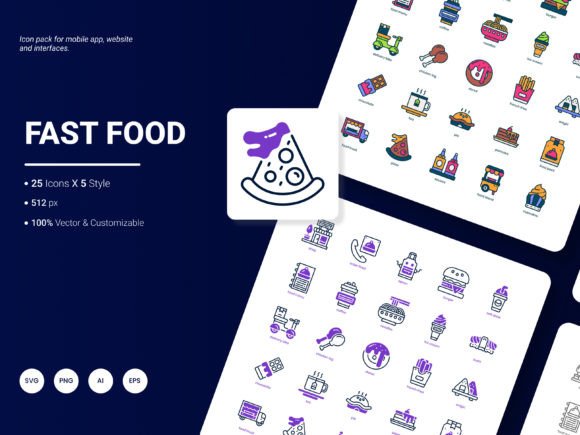
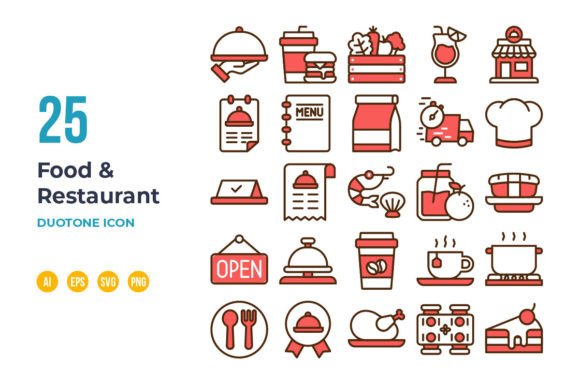
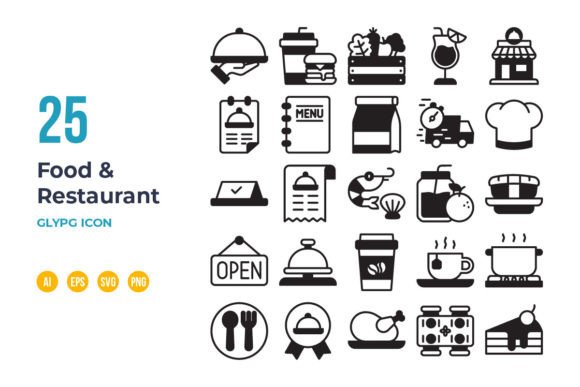
In the digital landscape where clarity and speed of communication are paramount, visual tools become strategic assets. For entrepreneurs, marketers, and creators operating in the food, hospitality, and adjacent sectors, a well-designed Food and Restaurant Icon Set in Glyph style represents more than just decorative graphics. It is a cohesive visual system designed for functional communication. Glyph icons, characterized by their simple, clean outlines and often monoline aesthetic, strip away stylistic complexity to focus on the essential form of an object. This intentional minimalism makes them exceptionally versatile for modern digital interfaces where clarity, scalability, and brand alignment are critical.
The Strategic Utility of a Unified Visual Language
A comprehensive icon set provides a unified visual language. Instead of sourcing disparate icons from multiple creators—each with different stylistic weights, detail levels, and artistic interpretations—you gain a complete, consistent library. This consistency is a subtle yet powerful tool for building professional credibility and enhancing user experience. When a customer navigates your restaurant’s mobile app, browses your catering service’s website, or reads your food blog’s infographic, a consistent icon style creates a seamless, intuitive journey. It reduces cognitive load, allowing the user to focus on your content or service, not on deciphering inconsistent visual cues.
Thoughtfully employed, this icon set supports specific operational and branding goals. For a small business owner launching a new cafe, icons can streamline the online menu presentation, making item categories (like vegan, gluten-free, or spicy) instantly recognizable. For a marketing professional creating a social media campaign for a food delivery service, these glyphs can be used to create engaging, quickly understandable posts about delivery zones, meal types, or promotional deals. The simplicity of the design ensures they remain legible even at small sizes on mobile screens or as part of dense infographics.
Planning for Integration: Key Considerations Before Use
Approaching a Food and Restaurant Icon Set in Glyph with intentionality begins with alignment. Before integrating any visual asset, consider its role within your larger communication strategy. What specific functions will these icons serve? Will they act as navigational aids on a website, as illustrative elements in an educational pamphlet about nutrition, or as branding accents on packaging concepts? Defining this purpose prevents random, decorative use that adds visual noise rather than value.
Another critical consideration is technical compatibility and adaptability. The value of a set offering vector source files (AI, EPS, SVG) and transparent PNGs is profound. Vector files are not static images; they are mathematical equations defining shapes. This means you can resize them infinitely without loss of quality—from a tiny app button to a large poster—and crucially, you can customize them. Using software like Adobe Illustrator, you can edit stroke weights, change colors, or even modify compositions to better align with your existing brand palette and typography. This adaptability ensures the icons become a true extension of your brand, not a foreign element.
Practical Applications Across Professional Endeavors
The utility of a clean Food and Restaurant Icon Set in Glyph extends across numerous realistic use cases for our target audience.
- Web & Mobile Projects: Use icons as intuitive interface elements. A glyph of a shopping cart for online food ordering, a map pin for location-based services, or a simple chef’s hat for a “About Our Chef” section. Their expanded stroke option ensures they maintain presence even on bright backgrounds.
- Enhanced Communication & Learning: Educators or corporate trainers creating materials on food safety, culinary techniques, or dietary guidelines can use icons to create memorable visual anchors. A simple, clear icon for “refrigerate” or “hand wash” can improve comprehension and retention.
- Branding & Operational Efficiency: Freelancers and small business owners can use the set to create consistent branded materials—from simple invoice headers featuring a plate icon to internal kitchen checklists using glyphs for equipment. This visual consistency builds a professional identity efficiently.
- Social Media & Marketing Content: Marketers and creators can rapidly assemble eye-catching graphics. A carousel post showcasing menu highlights can use consistent icons for each dish type. Their PNG transparency allows easy layering over photos or colored backgrounds.
In each case, the strategic benefit lies in speeding up recognition and reinforcing structure. The user doesn’t read “hot beverage”; they instantly see a clean cup icon. This efficiency improves the user’s experience and supports your goal of clear communication.
Potential Risks of Uncontextualized Use
Like any tool, a Food and Restaurant Icon Set in Glyph carries risks if used without clear goals or context. The primary risk is visual clutter. Overusing icons, or using them in situations where text alone would be clearer, can make an interface or document feel busy and confusing. Icons should complement and clarify, not replace or obscure. Another risk is miscommunication. While a glyph of a fish might universally represent seafood, a more abstract icon could be misinterpreted by different cultural or user groups. Always test for clarity with your specific audience.
Furthermore, relying on icons as a shortcut for poor information architecture is a mistake. They cannot fix a fundamentally confusing menu layout or a poorly structured app workflow. They are best deployed within a well-planned structure, enhancing an already sound foundation.
Achieving Long-Term Value Through Intentional Customization
The long-term value of this asset is unlocked through its customizable nature. As your brand evolves, your color scheme might shift, or you might need to highlight certain elements more strongly. With the vector source files, you are not locked into the original design. You can adjust stroke weights to make icons feel more bold or delicate, matching new typography. You can recolor them to create sub-categories within your visuals—using a green hue for all vegetarian-related icons, for example. This flexibility makes the set a durable investment, adaptable to future projects and branding updates.
To use a Food and Restaurant Icon Set in Glyph intentionally, start with a audit of your current visual communication. Identify places where recognition is slow, where text is overly dense, or where visual consistency is lacking. Then, select icons that directly address those gaps. Implement them systematically, maintaining strict consistency in their size, color treatment, and usage rules across your materials. This disciplined approach turns a collection of graphics into a coherent visual system that works silently but effectively to support your professional goals, from enhancing customer experience to streamlining internal operations.
Ultimately, these icons are not merely graphics; they are functional components in your communication toolkit. Their simple and clean design, backed by versatile file formats, offers a strategic way to achieve better results in digital projects. By focusing on their role in planning, positioning, and user experience, professionals can leverage them to create clearer, more engaging, and more professionally consistent outcomes across web projects, mobile apps, social media, and beyond.