160 Check Mark Cross Mark Symbols: A Vector Asset Library for Modern Visual Communication
In the fast-paced world of digital content creation, the need for clear, immediate visual cues is paramount. Whether you're building a user interface, crafting an infographic, or designing a presentation slide, symbols like check marks and cross marks are fundamental. They convey completion, correctness, approval, or error in a glance. The 160 Check Mark Cross Mark Symbols collection is precisely engineered to meet this need, offering not just variety but a robust, multi-format vector asset library designed for seamless integration into professional workflows.
The Core Utility in Digital Workflows
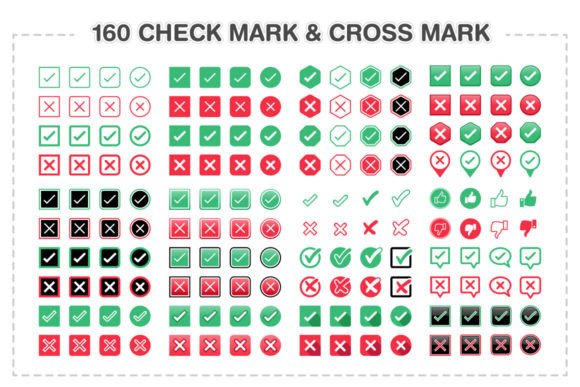
This set is more than a simple icon pack; it's a comprehensive toolkit. At its heart are 160 distinct symbols, providing an extensive range of styles—from minimalist and geometric to more detailed and ornate. This variety ensures you can match the visual tone of any project, whether it's a sleek tech app or a friendly educational brochure. The true power, however, lies in its preparation for integration. The collection is delivered in multiple file formats including .ai (Adobe Illustrator), .eps (EPS 10 vector), .svg, .png, and .jpg. This deliberate multi-format approach means the assets are ready for virtually any stage of your production pipeline.
Preparation and Asset Compatibility
Starting a project often involves gathering resources. Having these symbols in both editable vector (.ai, .eps, .svg) and ready-to-use raster (.png, .jpg) formats eliminates a common bottleneck. The Illustrator Ai files are particularly valuable as they contain organized artboards. This allows designers to open a single master file, see all 160 options laid out, and directly copy the specific symbol needed into their working document without hunting through separate files. For developers or web designers, the SVG format provides scalable, crisp graphics that won't blur at any resolution, essential for responsive websites and applications. The PNGs and JPGs serve as quick-place assets for software like PowerPoint, Canva, or video editing tools where immediate use is priority.
This upfront compatibility planning translates directly into efficiency. It saves the time typically spent converting file formats or recreating simple icons, allowing you to focus on the higher-level structure and message of your project.
Practical Implementation Across Media
The application of these symbols spans the entire spectrum of new media. Their design makes them perfect for integration into templates. Consider a Web Marketing Agency developing a client dashboard template; using consistent check marks for achieved KPIs and cross marks for pending items creates an instant, understandable reporting system. For Social Media Services, these symbols can be used in carousel posts or infographics to visually highlight benefits versus drawbacks, or steps completed in a service process.
- Online Marketing Apps & Websites: Use them as interactive elements—check marks for completed form fields, cross marks for invalid entries. Their clarity enhances user experience (UX) and guides interaction.
- Presentation & Promotional Materials: In slide decks or sales brochures, they serve as visual anchors for key points, comparison tables, or process flow diagrams, making complex information digestible.
- Infographics: Here, the 160 Check Mark Cross Mark Symbols become the backbone for data visualization, representing statistical positives/negatives, survey results, or pros/cons lists with visual impact.
Customization and Long-Term Use
A critical feature for professional use is customizability. As vector files, the symbols in the .ai, .eps, and .svg formats are inherently flexible. You can change colors effortlessly to align with your brand palette—a green check for success, a red cross for warning. You can resize them without quality loss, combine them with other shapes, or even modify stroke weights if the source file allows. This adaptability ensures the asset library isn't a one-time purchase but a long-term resource. A small business owner might use the same set of symbols in their website, their printed flyers, and their internal training documents, maintaining brand consistency across all touchpoints.
Organization is key for long-term asset utility. Keeping the master Illustrator file and the folder of exported formats in a dedicated "Visual Assets" directory within your project management system means these symbols are always at hand for future projects. This practice turns the collection into a standard part of your visual language, improving both consistency and speed in future workflows.
Integration into Collaborative and Iterative Processes
Modern creative and business workflows are often collaborative and iterative. The 160 Check Mark Cross Mark Symbols facilitate this. When a designer passes an Illustrator file to a colleague for further development, all symbols remain editable. When a marketer provides a set of PNGs to a content writer for use in a blog post layout, the writer can place them without specialized software. This reduces friction in team-based projects.
Consider a workflow example for an educator creating an online course module:
- Planning: In the initial outline (using a tool like Notion or Google Docs), placeholder text indicates where visual symbols will reinforce learning objectives—"check mark next to key takeaways, cross mark next to common misconceptions."
- Execution: During the slide design in PowerPoint or Keynote, the educator imports the pre-made PNG symbols directly onto the slides, using them as planned.
- Quality Control & Publishing: Before finalizing, the educator or a peer reviewer checks that the symbols are used consistently—e.g., a check mark always denotes a correct answer—across all modules. The final assets are then embedded in the course platform.
This process-oriented use ensures the symbols serve a functional purpose, not just a decorative one.
Workflow Tips for Smooth Adoption
To integrate this asset library most effectively, a few practical steps can be taken immediately.
- Audit Your Templates: Review your frequently used presentation, website, or social media templates. Identify recurring spots where a binary visual indicator (yes/no, done/not done) would improve communication. Replace text-heavy or unclear graphics with a symbol from this collection.
- Establish a Style Guide Rule: If working within a team or brand, decide on a standard color and size for these symbols in different contexts (e.g., "In web interfaces, use #2EB52E for check marks at 24px; in print materials, use black at 18pt."). Document this in your style guide.
- Leverage the Vector Formats for Unique Needs: Don't just use the symbols as-is. If a project requires a specific tone, open the .ai file and subtly adjust the symbol—perhaps rounding corners or changing the line style—to better fit the overall design aesthetic. This preserves uniqueness while maintaining the core utility.
The outcome of integrating such a prepared resource is a tangible increase in production efficiency and communicative clarity. It removes the small, repetitive task of icon creation or sourcing, freeing up mental space and time for the more substantive aspects of your project: the strategy, the content, the narrative. For the productivity-minded user—whether a freelancer juggling multiple clients or a marketing agency streamlining its output—this is where the value materializes: in the cumulative time saved and the consistency achieved across all outputs.
Ultimately, the 160 Check Mark Cross Mark Symbols Feature represents a practical solution for a universal need in visual communication. By providing a structured, multi-format, and editable library, it fits directly into the planning, execution, and delivery stages of digital projects. Its use supports organization, enhances usability, and ensures quality control through visual consistency. For professionals and creators looking to optimize their workflows, such assets are not merely decorative elements; they are functional tools that, when integrated thoughtfully, become indispensable components of an effective production process.