Choosing a Modern Festive Icon Set: Evaluating the Christmas Icons Gradient Outline
When designing digital or print materials for the holiday season, selecting the right visual assets is a critical decision. Graphic elements like icons serve as both functional UI components and decorative accents, and their style directly influences the tone and professionalism of your project. Among the many available options, the Christmas Icons Gradient Outline set presents a specific aesthetic approach that merits careful consideration alongside other common styles.
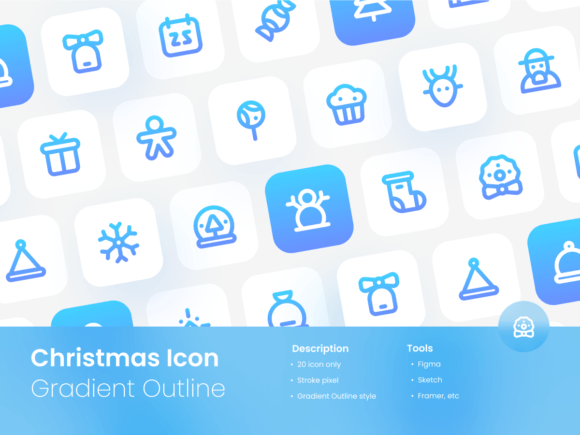
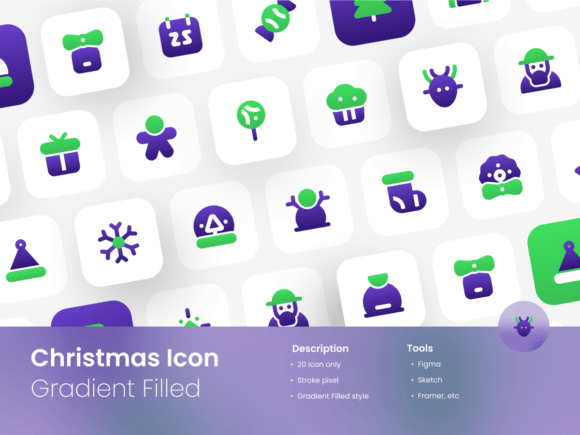
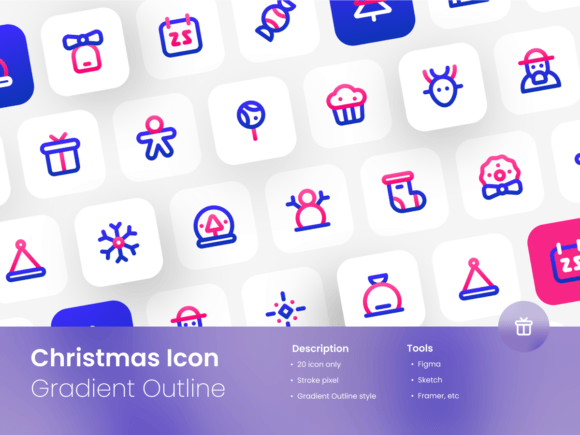
The Christmas Icons Gradient Outline is a collection of 20 holiday-themed icons characterized by a two-tone style with gradient outlines. This means the icons are not filled with solid color but instead feature lines and strokes that use gradient color transitions. The design leans toward a contemporary, sleek look, often evoking a sense of light, delicacy, and modernity. The religious theme focuses on traditional symbols like angels, stars, candles, and bells, reinterpreted through this clean, gradient-based technique.
Distinguishing Features and Core Design Philosophy
What sets this icon pack apart from more traditional solid-fill or flat-design Christmas icons is its emphasis on outline and luminosity. Instead of bold, blocky shapes, these icons use the gradient within the line work itself to create depth and visual interest. This can result in a less dominant, more integrated visual element on a screen or page, which might be preferable in minimalist interfaces or designs where icons need to complement rather than dominate other content.
The promise of perfect pixel alignment and 100% vector customization is significant for professional use. Vector files (like SVG, EPS, and Adobe Illustrator sources) allow for infinite scaling without quality loss, and editable shapes mean the icons can be modified beyond simple color changes. This level of control is a key advantage over static, raster-only icon sets, offering flexibility if your project requires slight adaptations to fit a unique layout or brand palette.
Comparing Style Categories: Gradient Outline vs. Common Alternatives
To understand where this set fits, it's helpful to compare its gradient outline style to other prevalent icon design categories.
Flat, Solid-Fill Icons: These are ubiquitous in UI design. They are simple, highly recognizable, and often bold. They communicate quickly and work well in low-contrast situations. A gradient outline icon, by contrast, may be less immediately legible at very small sizes due to its finer line details, but can offer a more sophisticated and less intrusive look in contexts where visual noise is a concern.
Realistic or 3D Icons: These aim for detailed, textured representations. They are rich and impactful but can feel heavy or outdated in modern digital design. The Christmas Icons Gradient Outline occupies a middle ground—it introduces complexity through gradient color but maintains a fundamentally abstract, simplified form, avoiding the potential clutter of full realism.
Hand-drawn or Sketch Icons: These convey warmth and personality. The gradient outline style is more systematic and digitally precise, leaning towards a polished, professional feel rather than an artistic, casual one. Your choice here depends heavily on the emotional tone you wish to set: handmade warmth versus modern precision.
Practical Application and Format Flexibility
The included file formats—Adobe Illustrator, FIGMA, EPS, SVG, and PNG—cover a wide spectrum of professional workflows. This multi-format approach is a strong point for teams using different tools. For instance, a web developer can directly implement the SVG files for a responsive website, while a print designer can work with the EPS files in a layout for a flyer or poster. The availability of both vector and raster (PNG) outputs means the set is usable from high-resolution print down to mobile app interfaces.
The claim of "easily drag and drop" and easy resizing is inherent to well-made vector assets, but it underscores the set's aim for user convenience. However, true customization—editing the actual shapes—requires software like Illustrator or Figma and some design skill. For a user who only needs to change colors, software that supports recolorizing vector artwork might suffice.
Evaluating Trade-offs and Potential Limitations
Every design choice involves trade-offs. The gradient outline aesthetic, while modern and light, may not suit every project.
Legibility in Complex Backgrounds: The fine, gradient lines might struggle against busy or patterned backgrounds. In such cases, a solid-fill icon with a clear silhouette often performs better. If your design uses simple, solid-color backgrounds or ample white space, the gradient outline icons can shine.
Consistency with Existing Branding: If your existing brand materials use a very bold, flat design language, introducing these more delicate icons could create a stylistic mismatch. They typically fit more seamlessly into brands that already employ gradients, thin lines, or a general minimalist aesthetic.
Religious Theme Scope: The set focuses on religious Christmas symbols. For projects requiring a more secular, commercial, or broad holiday focus (including Santa Claus, gifts, or snowmen), this specific pack would be limiting. In that scenario, a more diverse or secular Christmas icon set would be a necessary alternative.
Decision Factors: When This Icon Set Is the Right Fit
Choosing the Christmas Icons Gradient Outline set is most appropriate when several factors align with your project needs.
Project Tone: You are aiming for a contemporary, elegant, or softly festive feel rather than a bold, playful, or traditionally rustic one. This style conveys celebration with a touch of refinement.
Design Environment: Your layout or interface is clean, spacious, and likely uses a modern color palette where gradient effects are already present or welcomed. It works well in sleek website headers, minimalist mobile app navigation, or polished presentation slides.
Required Technical Flexibility: You need to scale icons to various sizes—from a tiny app button to a large poster element—and you have the capability or intent to potentially customize the vector paths or colors beyond the provided gradients.
Output Diversity: Your project spans both digital and print mediums, so having multiple vector and raster formats saves time and ensures consistency across different outputs.
When to Consider Other Options
There are clear situations where exploring different icon resources would be advisable.
If maximum immediate user recognition and clarity is your paramount goal, especially in functional UI contexts like e-commerce buttons or instructional infographics, more conventional solid-color icons might be a safer, more effective choice.
If your project's emotional core is rustic, handmade, or intensely vibrant, the subtlety of the gradient outline could underwhelm. A set with richer textures, stronger colors, or a hand-drawn style would better match that energy.
If you require a very broad range of holiday symbols that includes secular, winter-themed, or non-religious imagery, this focused 20-icon religious set simply won't provide the necessary scope. You would need a larger, more comprehensive collection.
Finally, if your technical workflow does not include vector editing software and you only need static PNGs at fixed sizes, the premium value of the vector source files might be less relevant. In that case, a well-made raster-only set at the required resolutions could be a more straightforward and cost-effective solution.
Making an Informed Choice for Your Holiday Projects
Ultimately, selecting visual assets like the Christmas Icons Gradient Outline set is about matching design properties to project requirements. Its distinct gradient outline and two-tone style offer a modern, lightweight alternative to common solid-fill icons. The strengths lie in its versatility across formats, its scalability, and its capacity for customization, making it a robust resource for designers with the tools to exploit those features.
The decision hinges on an honest assessment of your project's aesthetic direction, technical needs, and symbol requirements. By weighing the trade-offs in legibility, stylistic consistency, and thematic scope against the benefits of modern elegance and file flexibility, you can determine whether this specific icon set aligns with your goals or if a different stylistic approach would serve your holiday design more effectively.